- Phylum
- Cyanobacteriophyta
- Class
- Cyanophyceae
- Order
- Chroococcales
- Habitat
- planktonic
- Distinctive features
- rare.
- Organization
- colonies of 2-8 cells, rarely as single cells
- Color
- blue green
- Cell shape
- sphere
- Colony shape
- spherical
- Cell diameter (D)
- 4 – 10 μm
- Cell biovolume
- 35 – 500 μm3
- Biovolume equation
- Sphere V, μm3 = 4/3 π (D/2)3
- Cells per colony
- 4-30
Morphological features
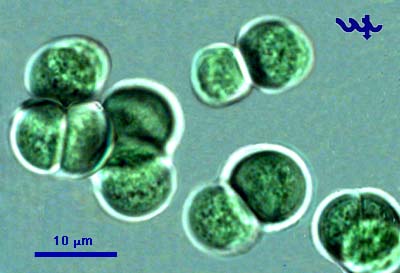
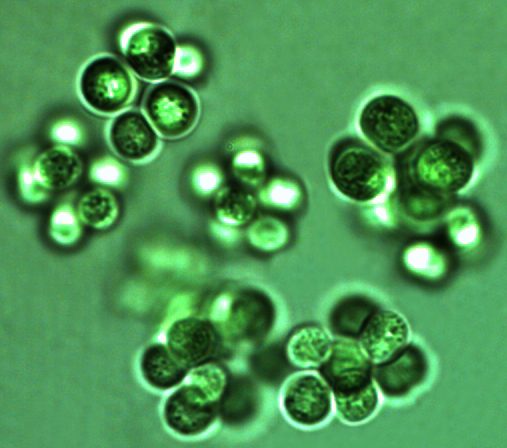
Colonies of 4-30 spherical cells that remain attached after cell division (Plate 1, 2). With wide colorless translucent gelatinous slime (Plates 1, 2). With envelopes around cells. No gas vacuoles.
Ecology
The species rarely occurs (Fig. 1).
Environmental conditions
Chroococcus limneticus was more abundant at warmer water temperatures, lower , and higher pH – to a limit of pH 9.0 (Fig. 2).
Cite this record as: Dr. Tamar Zohary, Dr. Alla Alster. 7 August 2026. Electronic publication. Israel Oceanographic & Limnological Research. https://kinneret-algae-atlas.org/ Searched on —.