- Phylum
- Dinoflagellata
- Class
- Dinophyceae
- Order
- Peridiniales
- Habitat
- plankton, mostly littoral
- Organization
- single cells
- Color
- yellow to golden-brown
- Cell shape
- ovoid or spherical
- Cell diameter (D)
- 17 - 26 μm, median: 22 μm (N=700)
- Cell biovolume
- 2600 - 9500 μm3, median: 5300 μm3.
- Biovolume equation
- V, μm3 = (4/3) π (D/2)3. (sphere equation)
Morphological features
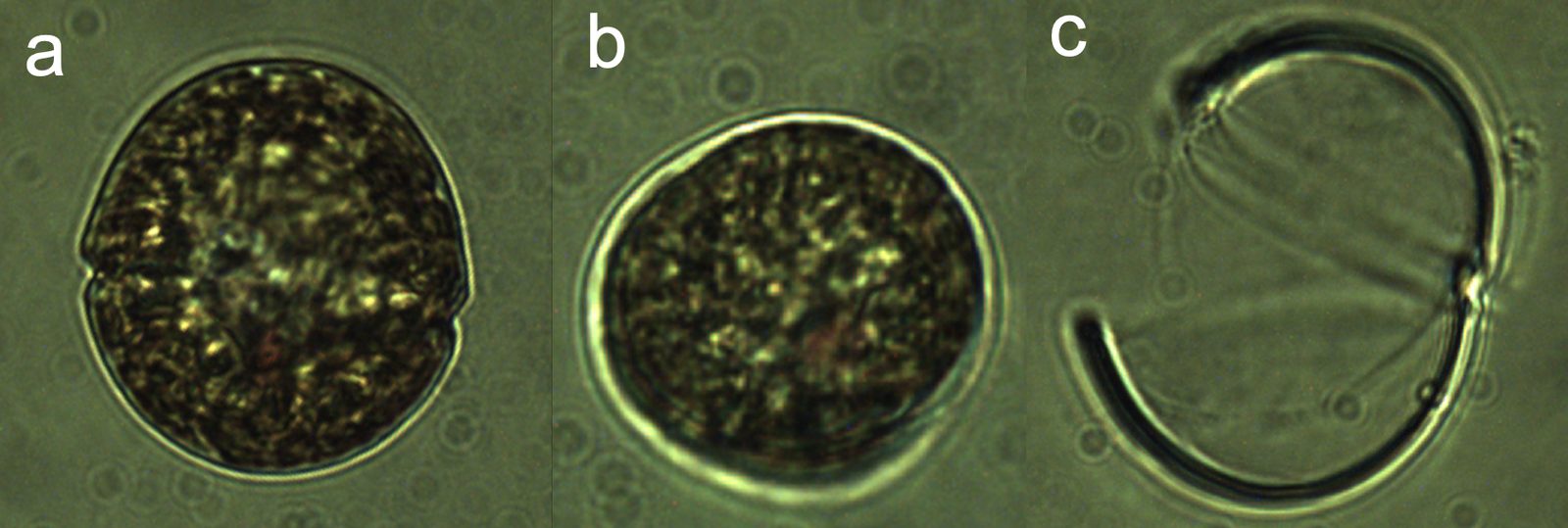
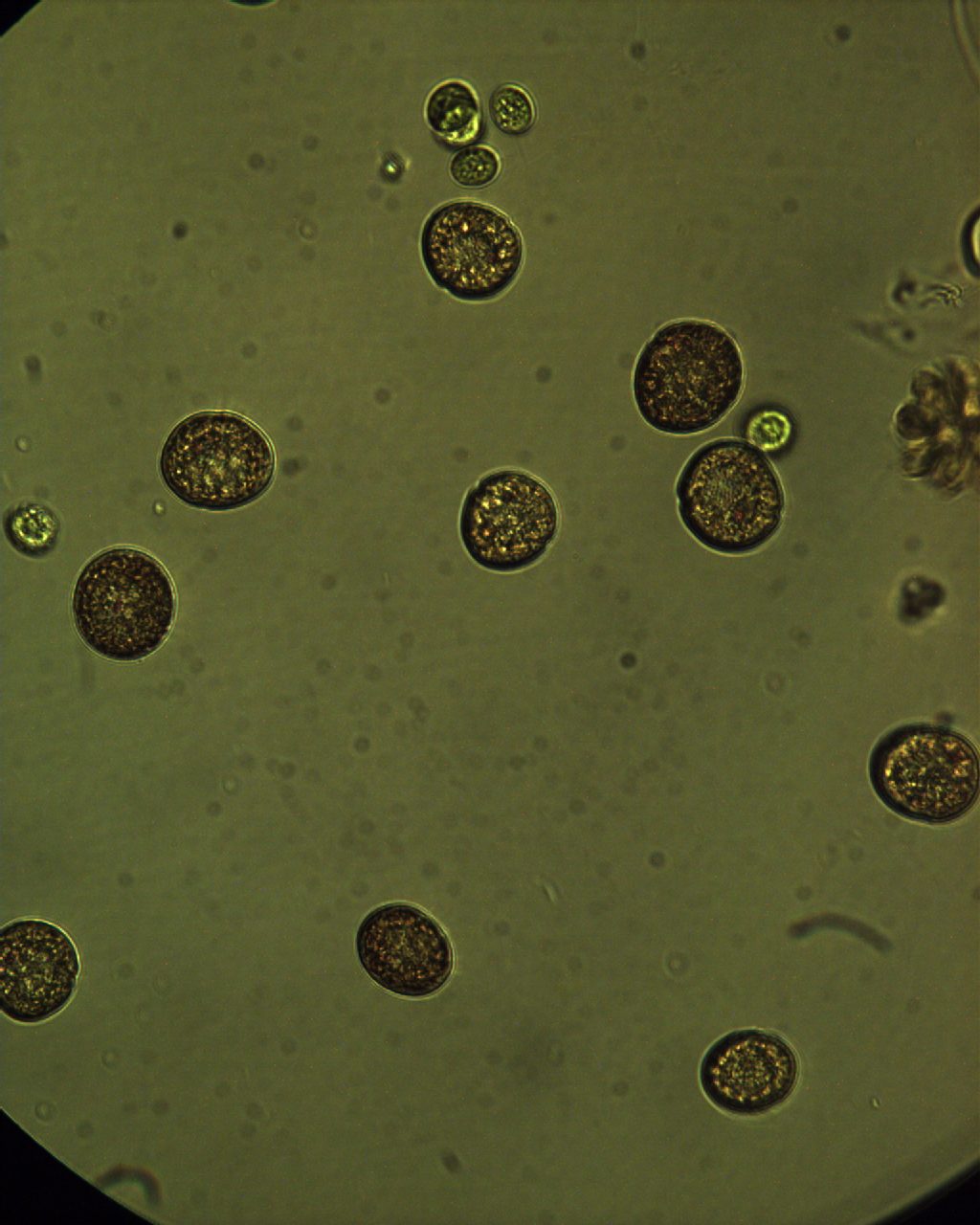
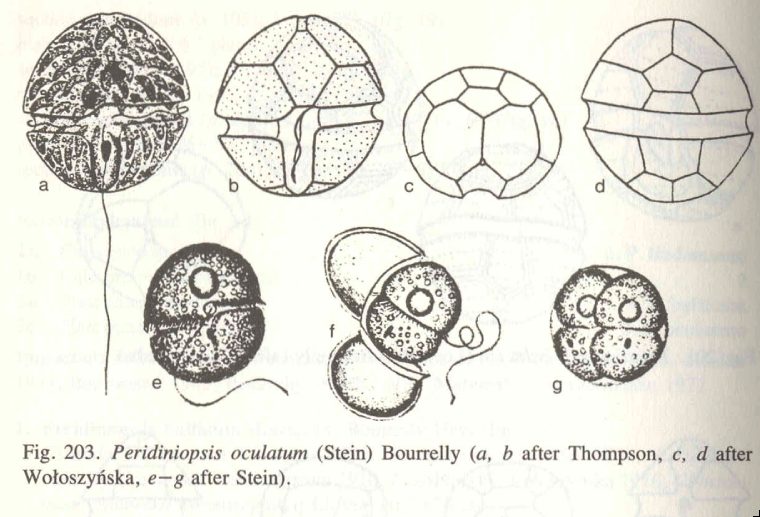
Cells are ovoid or spherical and slightly flattened dorsiventrally. The and are both half-sphere shaped, making together a sphere. The surrounds the cell at its middle (Plates 1a,b, 2). The is wide and does not reach the . Chloroplasts are numerous, disc or club shaped and . A is present. Vegetative cells are often embedded in mucilage. are barely seen on live cells therefore it was initially considered to be Glenodinium, a naked dinoflagellate, but the theca is evident after the cell sheds it (Plate 1c, 4).
Ecology
Durinskia oculata is rare in the pelagic water, it appeared in our samples in 1973-1975, then disappeared for many years, to re-appear for a short time in May 2000 and then again in June 2005. It appears more often in littoral samples. Little is known about this species.
Cite this record as: Dr. Tamar Zohary, Dr. Alla Alster. 7 August 2026. Electronic publication. Israel Oceanographic & Limnological Research. https://kinneret-algae-atlas.org/ Searched on —.